
TL;DR
- -Pool coping is the cap material on top of the pool's bond beam - it seals the shell, frames the water visually, and provides the grip edge swimmers use every time they enter or exit.
- -The four main coping profile styles are bullnose, cantilever, drop-edge, and square-cut, and each sends a different aesthetic signal from traditional to contemporary.
- -Travertine dominates the Lake Norman and Charlotte markets because it stays cool underfoot in summer heat, provides natural grip when wet, and weathers beautifully in the Carolina climate.
- -North Carolina's expansive red clay soil and seasonal freeze-thaw cycles put real stress on mortar joints, which is why flexible polymer-modified mortar and regular sealing are non-negotiable maintenance steps.
- -Coping, pool interior finish, and deck material should always be chosen together as a coordinated palette - never in isolation - for a result that looks intentionally designed rather than assembled from a catalog.
What Is Pool Coping and Why It Matters More Than You Think
Pool coping is the cap material that sits on top of the pool's bond beam - the structural concrete ring that surrounds the edge of your pool shell. It is the transition point where the pool ends and the deck begins, and it performs three important jobs at once. Structurally, coping seals and protects the bond beam from water infiltration and the seasonal movement that even our mild Carolina winters can produce. Done right, it extends the life of your pool shell for decades. Done wrong, it leads to cracked mortar joints, water intrusion, and expensive repairs within just a few years.
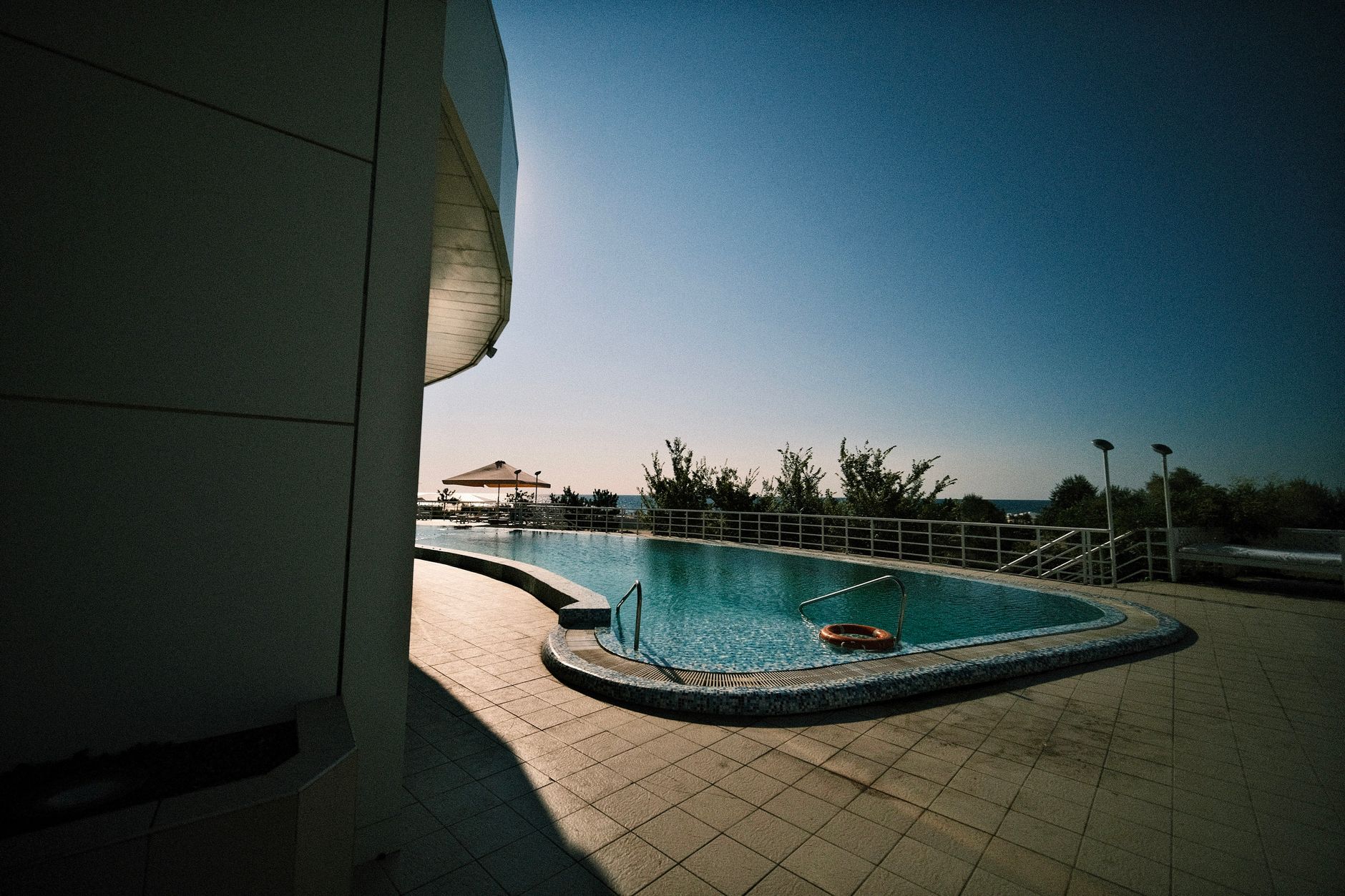
Aesthetically, coping is what frames the water. Before a single swimmer ever splashes in, the eye lands on the coping - its color, texture, and profile set the tone for the entire outdoor space. A tumbled travertine bullnose coping signals relaxed Mediterranean warmth. A smooth poured-concrete cantilever signals modern restraint. A dark-hued bluestone with a square edge signals something architecturally serious. Think of coping as the picture frame around your water - it determines how the whole composition reads.
Functionally, coping provides a slip-resistant edge that swimmers grip when entering and exiting. The profile determines how comfortable that grip feels, whether splashed water returns to the pool or runs onto the deck, and how much the edge heats up in direct Carolina sun. All three factors affect how much you actually enjoy the pool day to day, which is why coping deserves at least as much deliberate thought as your interior finish or deck material.
Bullnose, Cantilever, Drop-Edge, and Square-Cut: Understanding Coping Profile Styles
The profile refers to the shape of the coping's leading edge - the part that overhangs or meets the water. Four profiles dominate Carolina pool builds today, and choosing between them is as much a design decision as a practical one. The bullnose is the most traditional: the front edge is rounded and overhangs the water slightly, giving swimmers a comfortable, familiar lip to grip. It pairs naturally with natural stone or brick and has been the industry standard for decades because it simply works well in almost every context.
The cantilever coping is poured concrete formed to extend past the bond beam and hang over the water. Because there is no grout joint at the waterline, cantilever coping eliminates one of the most common pool maintenance headaches - deteriorating mortar at the pool's edge. It suits freeform pool shapes especially well, where the organic curves would require significant labor and material waste to achieve with cut stone. Cantilever can be colored, textured, or stamped to mimic stone at a more accessible price point.
The drop-edge, sometimes called a knife edge or zero-edge coping, creates a clean flush look where the coping sits nearly level with the surrounding deck. It makes the transition from hardscape to water appear almost seamless and is most at home on contemporary geometric pools in neighborhoods like South Charlotte or the newer waterfront developments around Lake Norman. The square-cut profile works similarly: a clean, unrounded stone edge that lends a precise, architectural quality favored by homeowners who want their backyard to look like a design magazine photograph.
Travertine: Why It Dominates the Lake Norman and Charlotte Markets
If you visit ten finished pools in the Lake Norman area, seven of them probably have travertine coping. That dominance is not a coincidence or a passing trend - travertine genuinely performs well in the Carolina environment, and its look complements the architectural character of most homes in our region. The stone is naturally porous, which means water vapor can escape through the surface rather than trapping beneath it, reducing the risk of spalling through our occasional freeze events. That same porosity creates a micro-texture that provides natural grip when wet, without the aggressive feel of brushed concrete.
Thermally, travertine stays significantly cooler underfoot than darker or denser materials. On a July afternoon in Mooresville when the air temperature is 95 degrees, travertine surface temperatures typically run 20 to 30 degrees cooler than dark concrete or certain porcelain tiles. For families with young children running barefoot from pool to deck and back, that difference is immediately felt. The stone's warm ivory and tan tones also complement the red-clay soil surroundings and the sandy-tan or cream-colored exteriors common across the Lake Norman corridor.
The primary maintenance requirement with travertine in a Carolina pool environment is sealing. The same porosity that keeps the stone cool also allows it to absorb pool chemicals, tannins from falling leaves, and the iron minerals that leach from our red clay. A penetrating sealer applied every two to three years keeps staining manageable and prevents calcium scale absorption from the pool water. Around saltwater pools especially, use a sealer rated for salt environments - your pool builder should specify the right product at project handoff.
Limestone, Bluestone, and Sandstone: Natural Stone Alternatives Worth Knowing
Travertine gets most of the attention, but several other natural stones make excellent pool coping in the Carolinas and can give your backyard a more distinctive character. Limestone is the closest relative to travertine - it shares a warm, neutral color palette and similar thermal properties but is typically denser and slightly harder. Honed limestone coping in soft gray or pale beige is a popular choice for homeowners who want the natural stone look with a more formal, less rustic quality than tumbled travertine provides.
Bluestone has been gaining momentum among Charlotte-area homeowners who favor a contemporary or craftsman aesthetic. Its blue-gray tones work beautifully with darker pool interior finishes - a charcoal quartz PebbleSheen interior paired with charcoal-veined bluestone coping creates a dramatically sophisticated backyard that photographs exceptionally well. Bluestone is dense and hard, which makes it durable, but it can get warm in direct afternoon sun and requires careful installation in wide, unbroken runs to manage thermal expansion.
Sandstone offers a warmer, earthier palette than either limestone or bluestone, with tones ranging from cream through terra cotta. It is a softer stone, more susceptible to chipping and edge wear than travertine or limestone. For low-traffic adult-oriented pool environments, sandstone can be a beautiful and distinctive choice. For high-traffic family pools where children are constantly hopping in and out, we generally steer clients toward harder stone options that will hold their edges cleanly for many years.
Poured Concrete Cantilever Coping: The Most Versatile Option for Gunite Pools
Poured concrete cantilever coping is the most cost-effective option and, when executed with skill, can be genuinely beautiful. The concrete is formed in place using a foam form that creates the overhang and the desired edge profile. Once the concrete sets and the form is stripped away, the surface can be left smooth, broom-finished, exposed-aggregate, acid-washed, or stamped to mimic stone. Integral color pigment shifts the concrete from plain gray to warm buff, soft charcoal, or almost any tone you want to coordinate with your home's exterior palette.
The practical advantage of concrete cantilever coping over cut stone is the elimination of grout joints at the waterline. Stone coping is set in mortar on top of the bond beam, and that mortar joint is the most vulnerable point in the entire assembly. Water gets in, freeze-thaw cycles open it slightly, pool chemistry erodes it over years. With a poured cantilever, there is no mortar joint at the waterline - the concrete integrates directly with the pool shell, creating a more monolithic and durable assembly that demands less maintenance over time.
Concrete cantilever is also the most flexible profile choice for freeform pool shapes. When a pool curves and bends organically - common on large Lake Norman lots where the pool is designed to wander through a landscape - cutting natural stone to follow every curve requires significant material waste and highly skilled labor. Poured concrete simply follows the form, making complex freeform shapes economical to build. For gunite pools, where the entire shell is formed in place, cantilever coping is a natural extension of the same construction approach.
Brick and Paver Coping: Warm Character for Traditional Backyards
Brick coping carries a warmth and familiarity that natural stone cannot quite replicate. For traditional, colonial, or craftsman-style homes - common throughout the older established neighborhoods of Charlotte and the smaller towns surrounding Lake Norman - brick coping feels architecturally honest and grounded. Tumbled brick coping has a rounded, worn edge that gives the pool an old-world quality, as if it has been part of the landscape for generations. It pairs naturally with brick homes, clay tile roofs, and warm wood tones in the surrounding outdoor space.
Concrete pavers used as coping offer dimensional consistency that natural stone cannot always guarantee. Every paver is the same thickness, the same size, the same surface texture - a consistency that makes for a faster and more precise installation. For homeowners, it also means that if a single paver is damaged years later, replacing it is straightforward, as the same product from the same manufacturer can typically be sourced. Look for pavers specifically rated for pool environments: dense enough to resist chemical absorption and textured enough to provide reliable grip when wet.
For both brick and paver coping in the Carolinas, the mortar joint specification matters. Our climate cycles between heat-driven expansion in summer and occasional hard freezes in winter, and a rigid traditional mortar cannot flex with that movement. Use a flexible polymer-modified mortar in all pool coping joints - it allows slight seasonal movement without cracking and significantly extends the interval between maintenance repairs. Any reputable pool builder in the Carolina market will specify this by default; it is worth confirming during your design consultation.
How Carolina's Climate Should Shape Your Coping Decision
North Carolina and South Carolina share a climate that is warm enough to encourage long swimming seasons but demanding enough to stress pool materials in specific ways. The most important regional factor is the red clay soil underlying most of the Piedmont from Charlotte to Lake Norman and beyond. Red clay is highly expansive - it swells significantly when saturated with water and contracts when it dries out. That seasonal movement transfers forces to the pool's bond beam and coping, making flexible mortar joints and proper drainage around the pool perimeter critical design considerations rather than optional upgrades.
Summer heat is the other major force to plan around. Pool coping in a Carolina backyard faces intense direct sun from May through September. Dark materials - charcoal concrete, dark granite, certain dark limestones - can reach surface temperatures that are genuinely uncomfortable or even painful on bare feet on a July afternoon. Lighter-colored, naturally porous materials like travertine or beige limestone absorb and dissipate heat more slowly, making them dramatically more livable in real-world use. If a darker material is your aesthetic preference, planning for nearby shade structures or covered outdoor areas becomes especially important.
Freeze-thaw exposure in the Carolinas is mild compared to northern climates, but it still occurs. The Lake Norman area typically sees 20 to 40 nights per year when temperatures drop below 32 degrees before recovering above freezing by mid-morning. That cycle, repeated over years, is enough to exploit any weakness in porous stone that is not properly sealed or in mortar joints that have deteriorated. Sealing stone coping on a regular schedule and inspecting mortar joints every two to three years are simple, low-cost maintenance steps that dramatically extend the life of the entire assembly.
Coordinating Coping with Your Interior Finish, Deck, and Overall Design
The most common design mistake we see with coping selection is treating it in isolation - choosing the coping material before settling on the deck or before knowing the interior finish color. Coping, deck, and interior finish are a three-part palette that should be chosen together, because each one affects how the others read visually. A warm ivory travertine coping looks entirely different paired with a warm sand PebbleSheen interior versus a cool gray quartz interior. The surrounding deck color shifts both combinations again. Choosing one element at a time almost always produces a result that feels slightly off even when each individual selection seems reasonable on its own.
The coping color also affects how the water reads optically - a factor that matters especially on vanishing-edge pools and pools with dark interior finishes. A light coping paired with a dark interior makes the water appear deep and jewel-toned at the edge. A coping that matches the deck creates a seamless transition that makes the water feel embedded in the landscape rather than contained in a visible vessel. Neither approach is wrong, but the effect is dramatically different, and seeing it in context before committing is the only reliable way to make the decision with confidence.
At Rock Water Pools, our design consultations always include physical material samples brought to your site. We want you to hold travertine and limestone next to your home's exterior, set coping profiles on your existing hardscape, and see how everything looks in your specific outdoor light at different times of day. A material that looks perfect in a showroom under fluorescent lighting may read very differently at noon under full Carolina sun or at dusk with landscape lighting on. That in-person, in-context evaluation is the difference between a design you love for years and one that leaves you wondering what you would have chosen if you had known better.
Ready to Design Your Perfect Pool Edge? Here Is How to Get Started.
Choosing pool coping is one of the decisions that separates a pool that looks assembled from a catalog from one that was clearly designed for a specific home, a specific family, and a specific way of living outdoors. It is a detail worth getting right - and getting it right is much easier when you have an experienced builder walking you through the trade-offs with real samples in hand.
Rock Water Pools builds custom concrete and fiberglass pools across Lake Norman, Charlotte, Mooresville, Cornelius, Huntersville, and the surrounding Carolinas region. Our design process is thorough and unhurried, built around giving you the information you need to make confident decisions. If you are planning a pool for this summer or fall, now is the right time to start the conversation - our permit-to-dig pipeline runs eight to twelve weeks, and the most sought-after build slots fill well before the season begins.
Call or text us at (704) 450-1023, or reach out through our website to schedule a no-cost design consultation. We will come to your site, understand your vision, bring material samples, and start building the design that turns your backyard into exactly what it should be. We look forward to helping you find the edge that defines everything.
About the author
Rock Water Pools - Custom Pool Designer & Builder. Mooresville-based custom pool design and build team. Serving Lake Norman, Charlotte metro, and the Carolinas since 2008. Hundreds of completed concrete and fiberglass builds across NC and SC. Questions? Call or text (704) 450-1023.
17+ years building custom inground pools across the Carolinas.