
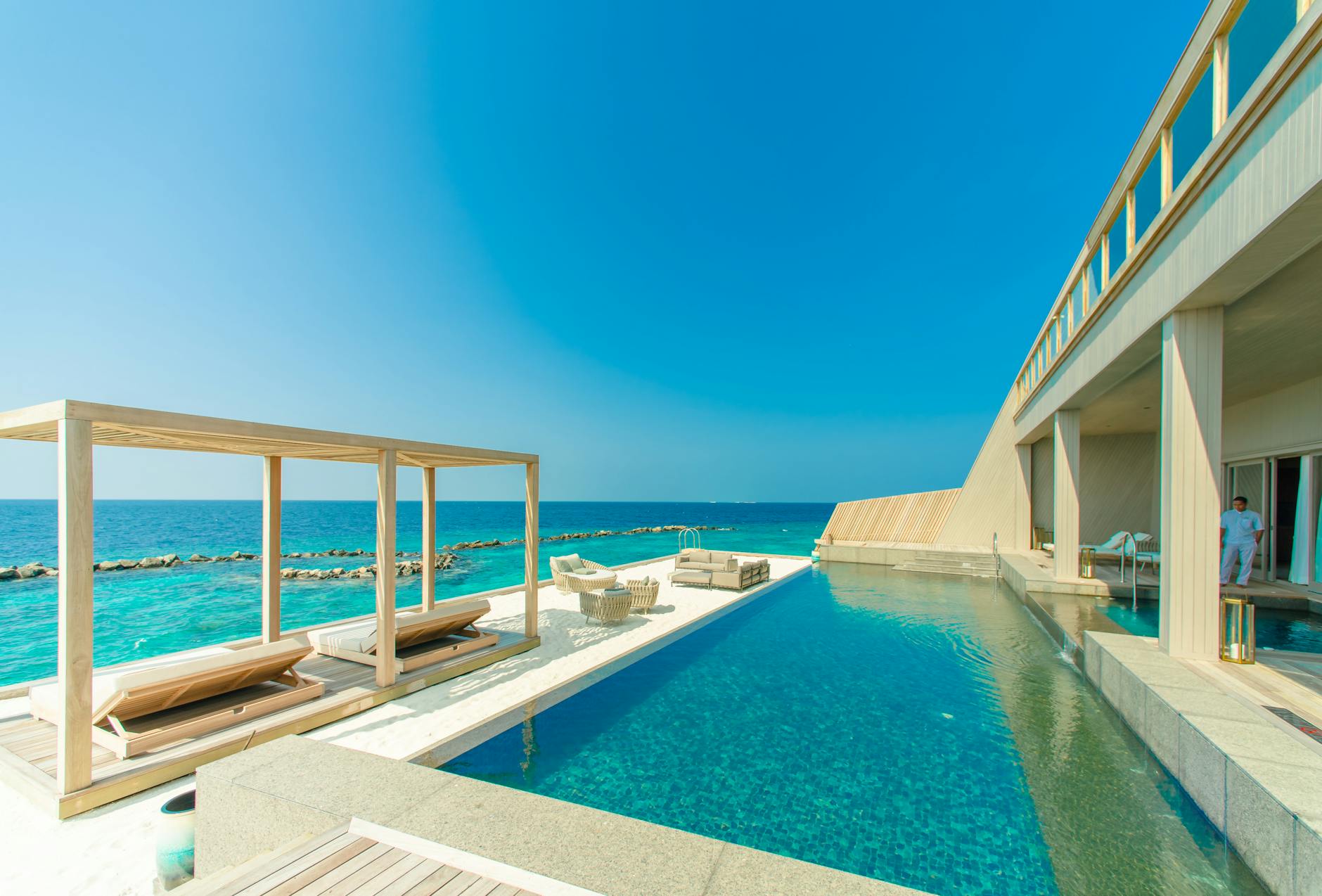
TL;DR
- -A pergola runs $8,000–$25,000, a pavilion $20,000–$50,000, and a full cabana $35,000–$100,000+. Know which you want before the pool design is finalized.
- -Building a shade structure during pool construction saves $5,000–$10,000 compared to retrofitting — conduit, footings, and mobilization costs are all shared.
- -Track your worst-case sun angle (2 PM in summer), keep the structure's drip line at least 4 feet from the pool edge, and plan all electrical circuits at rough-in.
- -Powder-coated aluminum is the low-maintenance winner for Carolina humidity; for roofing, metal standing-seam outperforms wood shingles for longevity.
- -Plan for 200–300 square feet of covered space and a minimum 10-foot ceiling height to get real airflow from ceiling fans.
Cabana, Pergola, or Pavilion — Know the Difference
These terms get used interchangeably, but they're not the same thing, and the distinction matters for your budget, permitting, and design intent.
A pergola is an open lattice or beam structure — it creates filtered shade and defines the space visually without blocking sun or rain entirely. Cost typically runs $8,000–$25,000 for a well-built structure, depending on material and size.
A pavilion adds a solid roof, usually metal or wood, giving you genuine rain protection and deep shade. Budget $20,000–$50,000 for a quality freestanding pavilion with proper footings, electrical, and a ceiling fan.
A cabana is the most complete version — a small structure with at least partial walls, often including a changing area, storage, and a sink. These start around $35,000 and can reach well over $100,000 if you're adding HVAC, a full bathroom, or outdoor AV.
Knowing which category fits your vision saves you from starting with a pergola quote and ending up confused about footings and permits.
Why Timing Matters So Much
When your pool and shade structure are built at the same time, you recover real savings. Electrical conduit gets buried in the same trenches. Concrete footings tie into the same pour schedule. Your contractor isn't mobilizing a separate crew at full markup six months later.
More importantly, the layout decisions — where afternoon sun hits, how guests move between the pool and kitchen, where you want privacy versus open sight lines — get made once, as a unified design. When you plan them separately, you end up retrofitting.
At Rock Water Pools, we see this play out regularly. A homeowner builds a beautiful pool, then two summers later wants a pergola on the west side of the deck. What looked like a simple add-on turns into jackhammering pavers, running new conduit, and a mobilization charge. The pergola that would have cost $14,000 as part of the original project now runs $21,000.
Key Design Decisions to Make Early
Sun angle. Walk your backyard at 2 PM on a summer afternoon — that's your worst-case sun exposure. Note where the shade falls naturally and where it doesn't. Your structure needs to address that gap, not just fill a corner of the yard.
Clearance from the water. Keep the drip line of any overhead structure at least 4 feet from the pool edge. Too close and you'll fight constant debris in the water and moisture damage to the structure itself.
Electrical planning. Any serious shade structure needs circuits. Ceiling fans and lighting are the baseline. If you want a TV or a mini-fridge nearby, plan those circuits at rough-in — fishing wire through finished work later adds significant cost.
Materials for Carolina conditions. Humidity and UV in the Lake Norman area degrade materials faster than drier climates. Pressure-treated pine is the budget option but needs regular sealing. Cedar performs better and looks warmer. Powder-coated aluminum has become the low-maintenance favorite over the last five years — it doesn't rot, doesn't splinter, and holds up well through Carolina winters. For roofing, metal standing-seam beats wood shingles for longevity and pairs well with modern pool aesthetics.
Permits. In Mecklenburg and Iredell counties, most attached pergolas and pavilions require a building permit and a site plan showing setbacks. Freestanding structures under certain square footages sometimes qualify as accessory structures with a lighter approval process. Your contractor should pull the permit — if they suggest skipping it, that's a red flag.
Getting the Size Right
For a family pool setup, most homeowners end up wishing they had 200–300 square feet of covered space. That comfortably fits a dining table, a few lounge chairs, and room to move. Anything under 150 square feet starts to feel crowded the moment you have six guests.
If you're adding ceiling fans — and you should — plan for a minimum 10-foot ceiling height. Anything lower and the airflow isn't effective enough to matter on a July afternoon.
Make It Feel Like It Belongs
The best poolside structures don't look added on — they look designed in. That means using the same coping material or complementary stone, matching the roofline proportions to the house, and thinking about sightlines from inside the home.
When the pool, deck, and structure are designed as a single system, what you get isn't just a place to swim — it's a backyard that earns every dollar you put into it, season after season.
If you're planning a pool build in the Lake Norman area and want to talk through what kind of shade structure makes sense for your space, call Rock Water Pools at 704-450-1023. We design the whole backyard, not just the pool.
About the author
Rock Water Pools - Custom Pool Designer & Builder. Mooresville-based custom pool design and build team. Serving Lake Norman, Charlotte metro, and the Carolinas since 2008. Hundreds of completed concrete and fiberglass builds across NC and SC. Questions? Call or text (704) 450-1023.
17+ years building custom inground pools across the Carolinas.